
How to Spot Fake Pokémon Cards: A Comprehensive Guide
Updated: Sep 11
Understanding Counterfeit Pokémon Cards
Counterfeit Pokémon cards are becoming increasingly sophisticated. As collectors, we need to stay vigilant because the stakes are high, and the last thing you want is to invest hard-earned cash into a fake. Whether you are hunting down singles or browsing bulk lots, here is your definitive field guide to spotting counterfeits in the wild.
The Classic "Too Good to Be True" Trap; Pokémon Card Authentication Guide
The easiest way to get burned is by price. If someone is selling a high-value chase card or a bulk lot of vintage packs for a fraction of market value, your internal alarm bells should ring immediately. Counterfeiters rely heavily on impulse buys fueled by "too good to be true" bargains.
The Feel and the "Sandwich" Test
Real Pokémon cards aren't just printed on a single sheet of thin cardstock; they are manufactured using a specific three-layer structure featuring a thin, opaque black core line sandwiched right down the middle.
The Layer Check: Look closely at the edge of a card. On a genuine card, you can often spot that thin dark middle layer.
Look for the Textural Fingerprint: Genuine ultra-rare, full-art, and secret rare cards feature a distinct, fine fingerprint-like textured pattern across the surface that catches the light; smooth, glossy fakes completely lack this texture.
The Texture & Snap: Run your fingers over the card. Real cards have a specific snap, a consistent thickness, and modern ultra-rare cards feature a distinct, fingerprint-like embossed texture that follows the artwork. Fakes often feel completely flat, flimsy, waxy, or weirdly plastic-slick.
The Flashlight Test (The Phone Torch Trick)
One of the quickest field tests you can do requires nothing more than your phone torch. Hold a bright light directly behind a suspect card in a dimly lit room.
How it Works: Western Pokémon cards use an opaque black core layer to block light. When you shine a bright flashlight behind a genuine English card, it blocks out most of the light, giving off a dim, even glow.
The Fake Indicator: Cheap counterfeits use thin, low-quality single-layer paper. When you hold a light behind them, the torch beam blasts straight through the card, illuminating the artwork like transparent glass.
Crucial Regional Exception: You cannot use the standard light test to spot fake Japanese cards. Authentic Japanese and most Asian-market cards do not use a black core layer; they rely on a different blue-ish or standard cardstock core that naturally lets light pass through. A see-through Japanese card does not mean it is counterfeit. Always check for crisp print quality, correct holographic texture, and vibrant colors instead.

Check the Back (The Undefeated Tell)
When counterfeiters copy a card, they usually focus all their energy on the front illustration and slip up on the back.
Color & Blur: Inspect the back of the card for sharp, crisp details and deep blue coloring. On a fake, the blue shade often runs too dark, too purple, or completely washed out, where the details and Pokéball border bleed together.
Misprints: Fakes are often printed badly off-center and can look like they've been through the wash. Counterfeit cards are an increasing issue in tourist spots globally (such as shops in Malaysia, Greece, and Spain), so holidaymakers should beware. Comparing a suspect card side-by-side with a known genuine card is a foolproof way to catch this.

Font Weight and Pixelation
Official fonts and energy symbols are remarkably difficult for bootleg printers to replicate with 100% accuracy.
Typography Checks: Compare the font thickness, energy symbols, and HP numbers against a known authentic card. Counterfeits often use slightly bolder or narrower fonts with incorrect spacing or blurry text.
Logo Alignment: If the crisp yellow border around the Pokémon logo bleeds into the letters, you are likely looking at a counterfeit.
6. Verify Regional Anti-Counterfeiting Stamps
Counterfeit checks aren't completely identical in every region, and modern international prints have introduced extra layers of security.
Simplified Chinese Security Seals: On Simplified Chinese Pokémon cards, look closely for official holographic anti-counterfeiting security stamps or labels (such as regional Pokémon logo seals or QR verification markers) that shimmer and shift color when tilted under the light.
Regional Nuance: While English and Japanese main-set cards rely heavily on cardstock density and physical texture, keeping an eye out for these localized anti-counterfeiting seals is essential when expanding into Asian regional releases.
Real Examples: Spotting Modern Counterfeits in the Wild
Modern fakes can be shockingly convincing at first glance:
The Corviknight VMAX Fake: A card like the Corviknight VMAX (showing set number TG19/TG30) can easily trick an excited buyer. However, if you look closely at the surface, it completely lacks the tactile ridges and etched texture that real ultra-rare and VMAX cards feature, remaining entirely flat and smooth.
The Giveaway Holographic Pattern: Real modern ultra-rares feature specific vertical brush or fingerprint textures. Fake examples give themselves away instantly under the light by showing a generic, uniform cross-hatch or starburst sparkle pattern covering the entire card.

The Plot Twist: Why Real Card Backs Can Look Completely Different
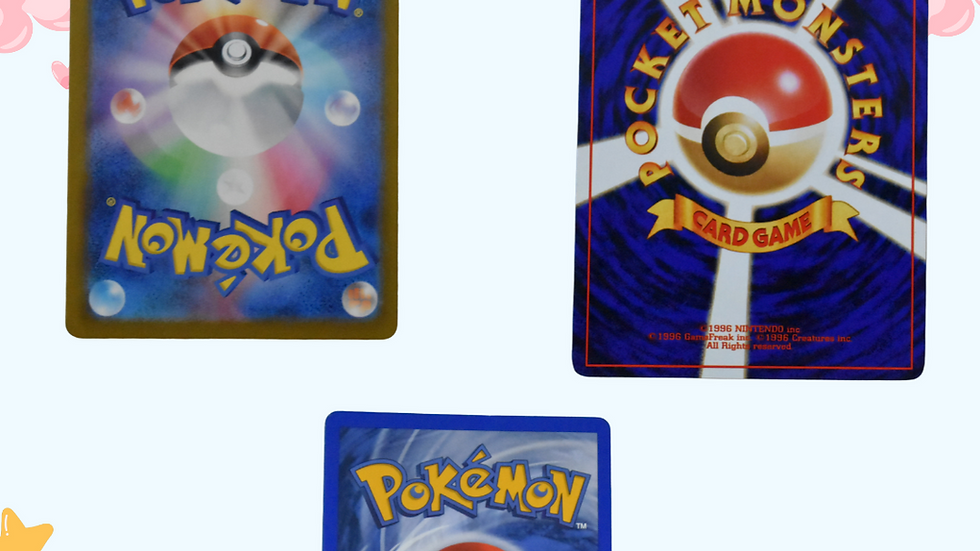
When you are learning how to spot fakes, it is easy to assume that any variation in the back of a card means it's a counterfeit. However, experienced collectors know that legitimate cards can have wildly different backs depending on where they were printed.
The Plot Twist: Why Real Card Backs Can Look Different
When learning how to spot fakes, it's easy to assume any variation on the back means it's a counterfeit. However, legitimate cards change depending on their region and era:
Japanese vs. International Backs: International backs feature the classic dark blue swirl design with the modern "Pokémon" logo, while Japanese backs feature the iconic "Pocket Monsters Card Game" logo over a red-bordered background with copyright text (© 1996 Nintendo, Creatures, Game Freak) at the bottom.
Vintage vs. Modern Japanese Backs: True vintage Japanese cards (1996–2001) feature a deep blue space motif with gold lettering, while modern Japanese sets (2002–Present) transitioned to a modernized back with a different shade of blue and finish.
A Quick Warning on Pokémon Vending Machines
A Quick Warning on Pokémon Vending Machines: More often than not, public vending machines or the products within them have been found to be resealed. Vendors frequently tamper with packs, ensuring all high-value hits are stripped out before you spend your money. Always buy from trusted, transparent sources.

Stay Sharp Out There!
Counterfeiters are always improving, but taking ten seconds to check the texture, inspect the back, verify fonts, or run a quick light test can save you from an expensive mistake. (While the ultimate test is ripping a card in half, we definitely do not recommend that!)
Have you ever stumbled across a fake card that almost fooled you in your collection? Stay informed, keep your collection safe, and happy collecting!

Comments